Tree Removal in Knoxville, TN
Knoxville is the anchor city of East Tennessee – a metro area of roughly 900,000 people spread across Knox County and the surrounding counties that orbit the city’s commercial, medical, and university core. The University of Tennessee, Market Square, and World’s Fair Park define downtown, but the tree work that matters most for homeowners happens in the residential neighborhoods that ring the city: Bearden, West Hills, Sequoyah Hills, Holston Hills, Fountain City, Fourth and Gill, North Hills, and the suburban corridors of West Knoxville stretching toward Hardin Valley and Farragut.
Knox County’s residential canopy tells the history of how the city developed. The oldest neighborhoods – Fourth and Gill, Holston Hills, Sequoyah Hills, and the streets around UT’s campus – have mature oak, elm, and maple canopies established in the early-to-mid twentieth century. These trees are now 60 to 90 years old and often showing it: included bark in major co-dominant stems, internal decay in lower scaffold branches, surface roots destabilizing sidewalks and driveways, and roots reaching utility lines and foundations.
The post-war suburbs that expanded Knoxville through the 1960s and 1970s – West Hills, Rocky Hill, Westwood, and the neighborhoods along Kingston Pike from Bearden to Farragut – carry a different profile: Bradford pears planted prolifically in the 1970s through 1990s are now entering the failure window, silver maples with aggressive roots and brittle wood, and white and red oaks developing the structural complexity that needs professional management. Bearden and West Hills generate a large share of the crane-required removals in Knox County because lots are tight and trees have grown into and above rooflines.
West Knoxville – from the Cedar Bluff corridor along I-40 out through Hardin Valley – is the newest residential stock in the county, with the youngest canopy. Trees in developments built from the late 1990s through the 2010s are hitting the 20-to-30-year mark, when the first wave of significant failures appears: Bradford pear splits, silver maple root damage, and loblolly pine stands thinned by southern pine beetle.
A jurisdiction note worth knowing: the City of Knoxville has its own Urban Forestry Division that manages trees in the public right-of-way, while Knox County operates outside city limits under different rules. Before scheduling removal of a tree near the street, confirm whether it’s on your property or in the city-managed right-of-way – city trees are the city’s responsibility. The pros we connect you with navigate this routinely and flag it during the site assessment. Knoxville also sits in the path of frontal weather systems and Gulf-fueled summer thunderstorms, with ice events in late January and February causing the most significant residential tree damage of the year.
Neighborhoods in Knoxville
- Bearden
- West Hills
- Sequoyah Hills
- Holston Hills
- Fountain City
- Fourth and Gill
- North Hills
- Hardin Valley
- West Knoxville
Services in Knoxville
Helpful Articles
Do You Need a Permit to Remove a Tree in Knoxville?
Most Knoxville homeowners don't need a permit to remove a yard tree. Street trees, big clearing jobs, stream banks, and Farragut are the exceptions to check.
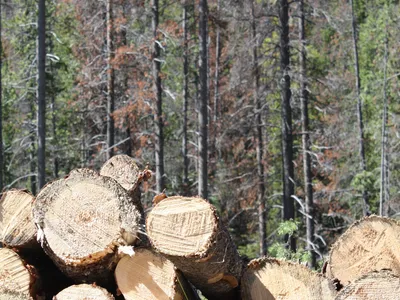
How Much Does Tree Removal Cost in Knoxville?
Real tree removal prices by size in Knoxville, TN: what drives your quote, ways to pay less, and the questions pros hear most. Call (865) 500-6459.
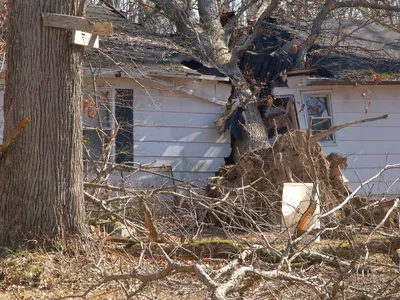
What to Do After Storm Damage to Trees in Knoxville
A tree is down after a Knoxville storm. Follow this 7-step checklist for safety, insurance, and recovery, plus when to call for emergency removal. (865) 500-6459.